Column · @emilioifhu385
Norweco Singulair Green for Sustainable Home Infrastructure

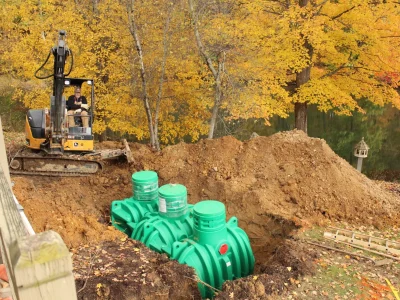
Sustainable home infrastructure usually brings solar panels, heat pumps, and rainwater capture to mind first. Wastewater treatment rarely gets the same attention, even though it shapes property use, long-term maintenance costs, groundwater quality, and the daily reliability of a home in ways most owners only notice when something goes wrong. For rural homes, lake properties, and lots beyond municipal sewer service, the septic or onsite treatment system is not a background utility. It is core infrastructure.
That is where the Norweco Singulair Green enters the conversation. Homeowners often look at this kind of system after a site evaluation shows that a conventional septic setup may be a poor fit, or when a failing older system needs replacement. Builders and designers turn to it when they need a treatment option that can perform to a higher standard than a basic tank-and-field arrangement, especially on constrained sites or where local regulations demand improved effluent quality.
The appeal is not simply that the norweco singulair green sounds more advanced. It is that modern onsite treatment can solve practical problems a standard system may struggle with. That includes difficult soils, limited lot size, seasonal occupancy patterns, sensitive waterways, and jurisdictions that require enhanced treatment before dispersal. If you are evaluating sustainable home infrastructure seriously, wastewater treatment deserves the same level of scrutiny you would give roofing, insulation, or energy systems.
Why onsite wastewater belongs in the sustainability discussion
A home can be energy efficient and still be hard on the land if its wastewater handling is weak. Poorly treated effluent affects soils, contaminates groundwater, and can add nutrient loading to nearby streams, ponds, or lakes. In some areas, the environmental consequences show up slowly, through algae blooms or elevated nitrates in wells. In others, the warning signs are immediate: odors, surfacing effluent, soggy drainfield areas, or repeated service calls.
A more capable treatment unit changes that equation. Instead of depending mainly on a septic tank for solids separation and a drainfield for final treatment, an advanced treatment system uses additional biological processes and mechanical components to improve effluent before it reaches the soil. That can reduce strain on the dispersal area and give designers more flexibility where soil conditions are not ideal.
From a sustainability standpoint, that matters because good infrastructure is not just about lower consumption. It is about durability, land stewardship, and designing systems that match real site conditions. In practice, many failures happen not because owners are careless, but because a conventional system was asked to do work the site could not support.
What the Norweco Singulair Green is meant to do
The Norweco Singulair Green is part of the advanced onsite wastewater treatment category. Exact configurations vary by project, local code, and installation design, but the broad purpose is straightforward: treat household wastewater to a higher level than a basic septic tank alone before discharge to an approved dispersal or polishing component.
In plain terms, the system is intended for properties where homeowners norweco singulair green excavatingnj.com need dependable onsite treatment and where local agencies, engineers, or installers may prefer or require a more robust treatment approach. That often includes new homes in rural subdivisions, replacement systems for failing sites, waterfront properties, and houses built on parcels with limited usable area.
One point that experienced installers understand quickly is that these systems are not plug-and-forget magic boxes. They can perform very well, but they perform well when the whole design is respected. Tank sizing, access, electrical reliability, ventilation, hydraulic loading, maintenance intervals, and dispersal design all matter. A good treatment unit installed poorly is still a poor system.
Where it fits better than a conventional septic setup
A standard gravity septic system remains a solid option on the right property. If the soils are suitable, the lot is generous, and regulations allow a conventional design, simplicity has real value. Fewer moving parts usually means fewer service concerns. That said, many lots are not ideal anymore. Land prices push construction onto smaller parcels, infill sites, sloped ground, or areas close to surface water. In those settings, higher treatment performance can be the difference between a buildable lot and a rejected permit.
The Norweco Singulair Green tends to be considered when owners or designers need one or more of the following:
- better effluent quality than a basic septic tank typically provides
- more flexibility on sites with challenging soils or limited area
- an option suited to environmentally sensitive locations
- a replacement path for an aging or noncompliant existing system
- a system that aligns with stricter local health department requirements
That does not mean every difficult property should default to this exact solution. Some sites call for peat filters, textile filters, drip dispersal, mound systems, or other advanced arrangements. The right choice depends on the soil report, setback requirements, water table, occupancy pattern, and local permitting rules. The practical value of the norweco singulair green is that it gives designers another serious tool when conventional systems are not enough.
The sustainability case is practical, not abstract
People sometimes hear "green" in a product name and assume marketing has outrun substance. In wastewater, the sustainability case is more grounded than that. Better treatment can protect nearby water resources, extend the service life of downstream soil absorption components, and make it possible to build responsibly on land that would otherwise be difficult to serve. That is not a slogan. It is site engineering.
On one lake-adjacent project I reviewed years ago, the owner initially wanted the least expensive conventional septic system the county would allow. On paper, that approach looked attractive. In reality, the lot had tight setbacks, a seasonal high water table concern, and a strong desire to preserve mature trees. Once the layout constraints were mapped honestly, the cheapest option stopped looking cheap. A more advanced treatment approach reduced some of the design pressure and created a cleaner permitting path. The owner paid more upfront, but the system fit the site rather than fighting it.
That trade-off shows up often. Sustainable infrastructure is rarely about choosing the lowest initial invoice. It is about selecting a system that reduces risk over decades. Wastewater systems age underground and out of sight. The financial pain appears later, when replacement means excavation, landscaping damage, emergency service, or permit complications. Investing in stronger treatment at the beginning can be one of the more sensible long-term decisions on a rural home.
What homeowners should expect before installation
The best projects start with honest site work. No reputable installer should recommend any advanced treatment system, including the Norweco Singulair Green, without understanding the property. The site evaluation usually includes soil conditions, topography, house size, fixture count, occupancy assumptions, well and surface water setbacks, and local code requirements. In some regions, a soil scientist, engineer, or licensed designer will be involved before equipment is ever selected.
Homeowners are sometimes surprised by how much of the decision has little to do with the brand name on the tank. The treatment unit matters, certainly, but so do the questions around it. Where will the dispersal area go? How will service access be maintained? Is there reliable year-round power? Will the house be occupied continuously, used on weekends, or left vacant for months? Are there vehicles, patios, or future additions planned near the installation area?
Those questions affect performance. Advanced treatment systems can handle residential use very effectively, but they still depend on sensible loading patterns and proper maintenance. A vacation property with long idle periods, for example, deserves a different operating conversation than a full-time family home with heavy daily water use.
Operation and maintenance are part of the purchase
One reason some property owners hesitate over advanced treatment units is maintenance. That concern is fair. A conventional septic tank also requires maintenance, but the intervals can feel less visible to the owner. With an aerated or otherwise enhanced treatment system, service becomes more deliberate. There may be mechanical components, controls, alarms, and periodic inspections required by local code or by the service provider.
That is not a flaw. It is the bargain. You are getting a more active treatment process, so you must support it. The mistake is pretending otherwise at the time of sale.
A realistic owner should budget for regular inspection and pumping based on use, not wishful thinking. Service intervals vary, and local requirements differ, so broad promises are unhelpful. What matters is establishing a clear service relationship from the start. I always advise owners to ask who will maintain the unit, how quickly they respond to alarms, what consumables or wear items may need replacement over time, and whether service records are needed for compliance.
A well-maintained system is usually quiet in the background. A neglected one announces itself at the worst possible time, often during a holiday weekend, a property sale, or a wet-weather period when repair work is most inconvenient.
The cost conversation, stripped of sales language
Advanced treatment systems cost more upfront than a basic septic tank in many cases. That is usually true, and trying to hide it wastes everyone’s time. Equipment, controls, design work, installation complexity, and long-term service all add cost. But price comparisons often become misleading because they compare unlike scenarios.
A fair comparison asks a better question: compared to what viable alternative? On an easy site with excellent soil and broad code flexibility, a simple gravity septic system may indeed be cheaper and perfectly appropriate. On a difficult site, the alternatives may include a larger engineered field, imported fill, pressure distribution, raised components, or major site disturbance. Once those costs are included, the price gap can narrow, and sometimes the advanced unit becomes competitive.
There is also the cost of failure to consider. Replacing a failed septic system after the norweco singulair green house, landscaping, hardscaping, and driveways are in place is rarely a small event. The bill includes not only equipment and labor but disruption. Mature plantings get removed. Access routes must be reopened. Occupants live with noise, excavation, and temporary wastewater workarounds. When owners focus only on initial installation cost, they tend to undervalue reliability.
Performance depends on household habits more than most people realize
Even a strong treatment system can be undermined by bad habits. Homeowners often think the equipment should overcome everything, but wastewater biology has limits. Grease loading, wipes, solvents, excessive bleach use, and unmanaged water spikes all affect treatment performance.
The households that get the best results are usually not obsessive. They are simply informed. They spread out heavy laundry use, fix leaks promptly, avoid flushing things that do not belong in a wastewater system, and keep service appointments. They also know where the system components are. That last point sounds basic, but I have seen owners lose hours, sometimes days, during service visits because final grades, sod, and decorative work erased all visual clues.
A sensible operating routine looks like this:
- know the location of tanks, risers, controls, and any alarm panel
- keep service records and pumping history in one place
- avoid flushing wipes, grease, paint, solvents, and non-biodegradable items
- direct roof drains, sump discharges, and surface runoff away from treatment areas
- call for service promptly if alarms, odors, or wet spots appear
None of that is glamorous, but it is the difference between infrastructure that quietly serves the home and infrastructure that becomes a recurring problem.
How the Norweco Singulair Green supports better site planning
One of the less appreciated benefits of improved treatment is design flexibility. Architects and builders often think about floorplans, orientation, and grading long before they think seriously about wastewater. Then the septic layout arrives and starts dictating the site. Suddenly the desired garage location conflicts with the reserve area, the patio cuts into setbacks, or driveway routing compromises access for future pumping.
An advanced treatment system can create more planning options, though not unlimited freedom. Better treated effluent may support a design that is more compact or better suited to the site constraints, subject to local code and engineering approval. On wooded lots, that can help preserve trees. On narrow parcels, it may help fit the required components without forcing awkward house placement. On renovation projects, it may allow owners to modernize properties that were built when wastewater expectations were very different.
That kind of flexibility is where sustainable infrastructure becomes tangible. It lets the home adapt to the land more responsibly instead of trying to overpower it.
Questions worth asking before you choose this system
A strong installer or designer should welcome detailed questions. If they seem impatient with them, that is useful information. Homeowners do not need to become treatment experts, but they should understand what they are buying and what living with it entails.
Ask about expected maintenance responsibility, power needs, alarm functions, service access, pumping frequency ranges, and local approval history. Ask what happens during extended vacancies. Ask whether the system has special considerations in cold weather. Ask what site conditions would make another treatment approach a better fit. The last question is especially revealing, because it tells you whether the recommendation is genuinely site-driven or simply the contractor’s preferred package.
It is also smart to ask how the dispersal component interacts with the treatment unit. Too many conversations stop at the tank, when in reality the field or final discharge element remains critical. Better influent treatment helps, but it does not erase poor dispersal design.
Common misconceptions that lead to bad decisions
The first misconception is that advanced treatment means zero maintenance. It does not. It means more active treatment and, typically, more structured oversight.
The second is that greener always means more complicated than necessary. Sometimes it does not. On a difficult parcel, a better treatment system can actually simplify the overall design because it reduces the stress placed on the site.
The third is that all advanced systems are functionally interchangeable. They are not. Availability of trained service providers, familiarity among local regulators, installation quality, and local climate all influence whether a particular system is a good practical choice.
The fourth is that wastewater only matters underground. In real property use, it affects resale, additions, guest capacity, permitting, and insurance conversations after damage events. Buyers are increasingly alert to septic condition, especially in rural markets and waterfront areas. A documented, professionally maintained system is easier to defend during a sale than an improvised or poorly understood setup.
When it makes the most sense
The Norweco Singulair Green makes the most sense when the owner is willing to treat wastewater infrastructure as a serious part of the home rather than a buried afterthought. That usually means valuing treatment quality, accepting routine maintenance, and making decisions based on long-term site performance instead of only upfront cost.
It can be a strong fit for environmentally sensitive locations, challenging soils, smaller or constrained lots, and properties where local rules call for enhanced treatment. It can also make sense for homeowners who want to reduce the risk that their dispersal area will be overloaded by poorly treated effluent over time. That is not a guarantee against failure, but it is a meaningful improvement in many site conditions.
For owners who want the simplest possible setup, have ideal soil, and do not face restrictive site constraints, a conventional system may remain the more rational choice. Sustainable design is not about choosing the most technical option every time. It is about choosing the option that best fits the land, the house, and the owner’s capacity to maintain it.
A better way to think about wastewater infrastructure
The most useful mental shift is to stop seeing wastewater treatment as hidden plumbing and start seeing it as land-based environmental infrastructure. Once you view it that way, the logic behind systems like the norweco singulair green becomes much clearer. You are not just buying a tank. You are investing in a treatment process that supports home performance, regulatory compliance, and stewardship of the site itself.
That perspective changes the purchase decision. Instead of asking only, "What is the least expensive system I can install?" You begin asking, "What system best protects this property over the next twenty to thirty years?" On the right site, those are two very different answers.
For homeowners building beyond municipal sewer lines, that distinction matters. A house can have excellent finishes, efficient mechanicals, and thoughtful architecture, but if the wastewater system is undersized, poorly matched to the soil, or neglected, the whole property carries that weakness. Good sustainable home infrastructure is only as strong as its least visible essential system. The Norweco Singulair Green belongs in that conversation because it addresses one of the most important and most overlooked pieces of the residential puzzle.
Excavating New Jersey LLC
406 County Rd 565, Wantage, NJ 07461, United States
+1 973-791-4284
FAQ About norweco singulair green
How much does a NORWECO septic system cost?
The installed cost depends on the selected unit, engineering, site access, excavation, electrical work, disposal-field design and required approvals. A tank-only price is not a complete installation quote. Ask Excavating New Jersey LLC for a site-specific, itemized estimate that also explains ongoing service costs.
How does a Norweco septic system work?
The Singulair Green uses pretreatment, aeration, clarification and filtration to treat domestic wastewater. In the aeration chamber, oxygen supports bacteria that break down organic material. The Bio-Kinetic unit provides further filtration and flow equalization. Final effluent disposal must follow the property's approved design and applicable requirements.
What is the average lifespan of a septic system?
There is no guaranteed lifespan for every system. Design, installation, soil conditions, wastewater loading and regular maintenance all matter, and mechanical parts may need replacement before the tank. For a Singulair Green system, follow the manufacturer's service schedule and have a qualified provider assess its condition and pumping needs.